

There’s a moment in almost every cancer diagnosis when the patient or their family asks the same question, in one form or another:
“So… do they cut it out first, or do the medicines come first?”
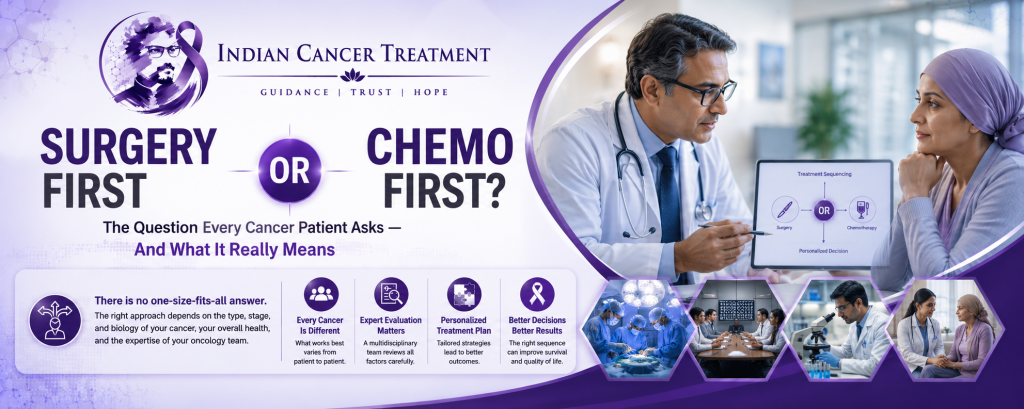
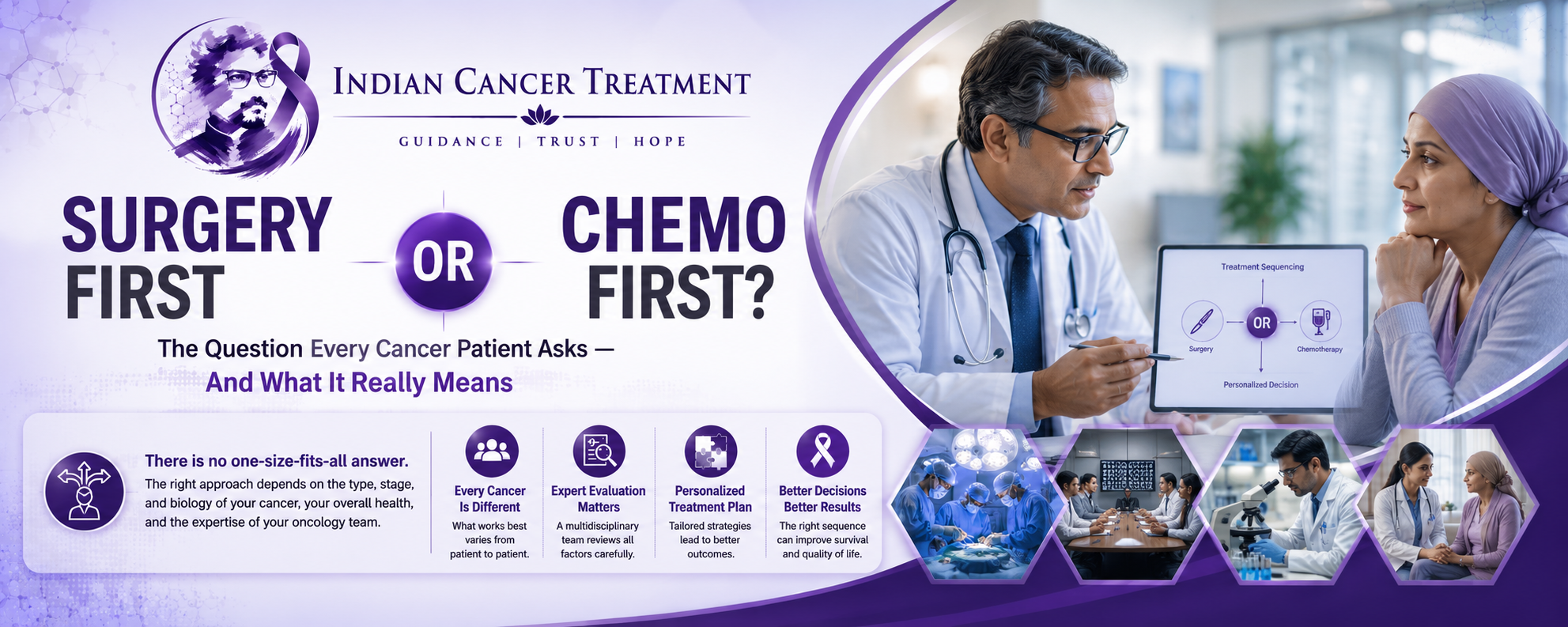
It sounds like a simple scheduling question. It isn’t. The order in which surgery, chemotherapy, and sometimes radiation are given is one of the most carefully calculated decisions in oncology — and understanding why a doctor picks one sequence over another can turn a frightening unknown into something you can actually make peace with.
Let’s unpack it, without the textbook language.
Two Roads, One Destination
In oncology, treatment given before surgery is called neoadjuvant therapy. Treatment given after surgery is called adjuvant therapy. That’s it — that’s the whole vocabulary lesson. Everything else is strategy.
Think of a tumor like an unwelcome tenant who’s overstayed in a house. You have two options: evict them first and clean up the mess after, or weaken them so badly beforehand that eviction becomes quick and clean. Neither approach is “better” in the abstract. The right one depends entirely on the tenant, the house, and how much damage waiting or acting first will cause.
Why a Doctor Might Say “Chemo First”
There are three real, practical reasons — not guesswork — behind choosing chemotherapy before surgery:
1. Shrinking the enemy. Some tumors are too large or too close to critical structures — blood vessels, nerves, organs — to remove safely on day one. Chemotherapy (or sometimes targeted therapy or hormone therapy) can shrink the tumor enough that the surgery becomes smaller, safer, and sometimes the difference between losing an organ and saving it. This is common in breast cancer, where neoadjuvant chemo can turn a mastectomy into a lumpectomy.
2. A live test of what’s working. When chemo is given before surgery, doctors can literally watch the tumor’s response in real time — through scans, sometimes through touch. If it’s shrinking, they know the drug regimen is effective. If it isn’t, they can switch strategy before surgery, not after, when it’s too late to course-correct. Surgery-first patients don’t get this early warning system.
3. Hunting the cells you can’t see. Cancer’s real danger usually isn’t the tumor itself — it’s the microscopic cells that may have already slipped into the bloodstream before diagnosis. Starting systemic treatment early means those wandering cells get attacked sooner rather than after a delay for surgical recovery.
Why a Doctor Might Say “Surgery First”
Equally, there are strong reasons to operate immediately:
- The tumor is already operable. If it’s small, well-contained, and not touching anything critical, there’s no benefit to waiting — and every week of delay is a week the disease could spread.
- Speed matters more than shrinkage. Some cancers grow or spread quickly enough that any delay for chemo could allow the disease to advance beyond a curable stage.
- Pathology needs the full picture. Removing the tumor first gives doctors the actual tissue to study in detail — its exact grade, margins, and biology — which then shapes a much more precise adjuvant treatment plan afterward.
The Part No One Explains Well: It’s Not a Coin Toss
This decision is made by a tumor board — a room of surgeons, medical oncologists, radiologists, and pathologists — after reviewing scans, biopsy reports, tumor markers, and the patient’s overall health. It is protocol-driven, backed by data specific to that cancer type and stage, not a personal preference of one doctor.
This is exactly why a second opinion at this stage isn’t a sign of distrust — it’s a sanity check on a decision that has real, physical consequences either way.
What This Means for You, As a Patient
If your doctor recommends neoadjuvant chemo, it does not mean your cancer is “too advanced” or “inoperable forever.” It often means the opposite — that the team wants to give you the best possible surgical outcome.
If your doctor recommends surgery first, it does not mean they’re skipping caution. It usually means the biology of your specific cancer rewards speed over shrinkage.
The right question to ask isn’t “Why aren’t we doing what my cousin’s hospital did?” It’s:
“What is the goal of this sequence for my specific tumor — shrinkage, information, or speed?”
That one question, asked plainly, usually gets you the clearest answer in the room.
Every treatment plan is a puzzle built around one patient’s biology — never a template. If you’re weighing a diagnosis and unsure which sequence makes sense for your case, a documented second opinion from a specialist panel can bring real clarity before you commit to a hospital or a plan.
By. ICT Admin Panel